 Photograph unavailable offline
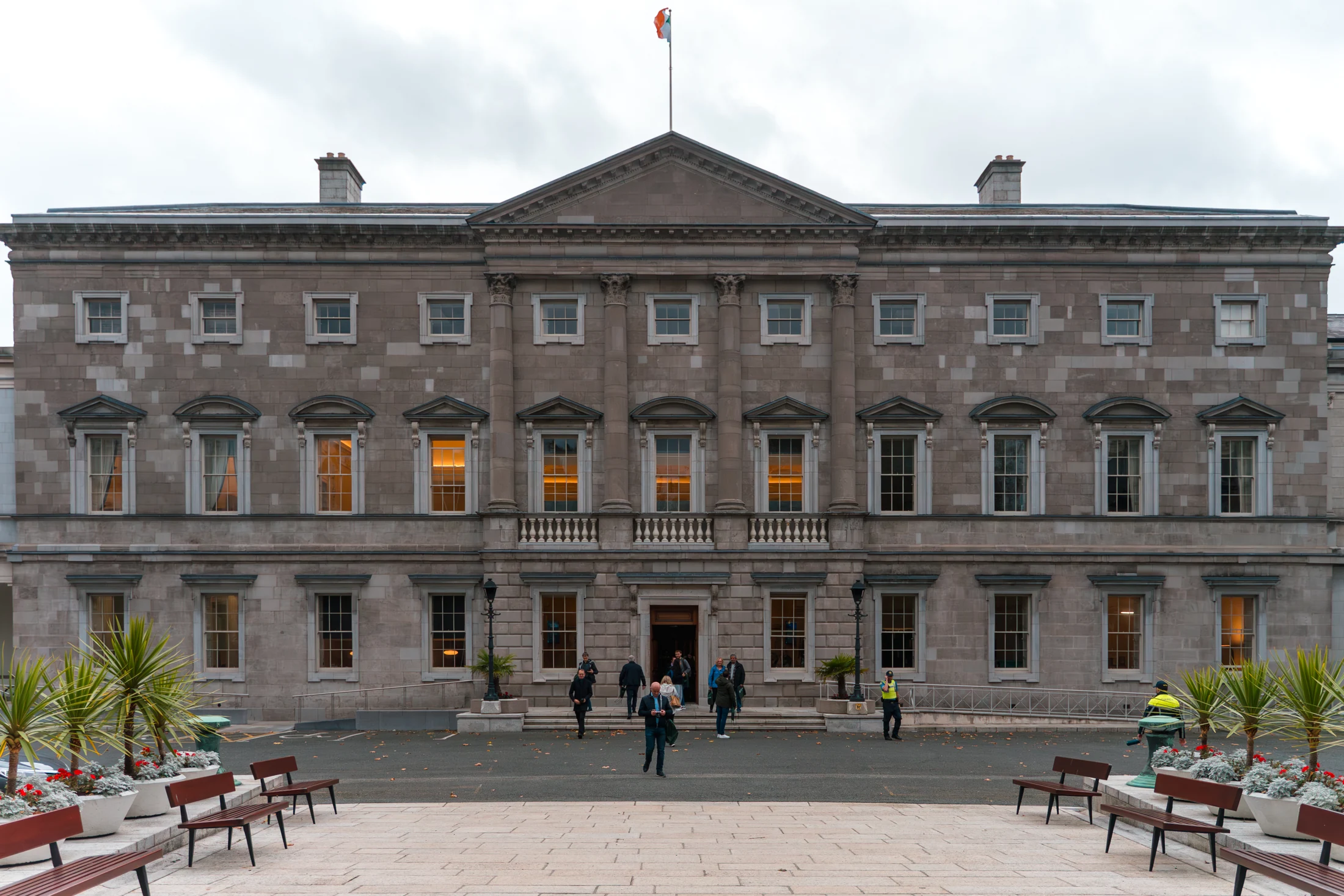
Leinster House, Dublin
What we mean by decolonisation
Decolonisation is not a slogan and it is not about blaming people living today. It is the work of identifying the laws, institutions, labels and habits inherited from colonial rule, then asking why they still shape Irish Traveller life.
Ireland was one of England's earliest and longest colonial projects. Land was reorganised, Gaelic law was displaced, movement was restricted and English systems of property, labour and administration became the official norm. These changes affected the whole island, but communities that kept older patterns of mobility, kinship, animals, craft and informal work remained especially exposed.
Colonial ideas did not disappear in 1922
Political independence did not replace every law, institution or way of thinking. The new State inherited administrative systems built around fixed address, private property, settled housing, regulated movement and official visibility. A mobile family did not have to be named in a law for that law to place pressure on its life.
The 1963 Report of the Commission on Itinerancy made absorption into the general population an official goal. Irish Traveller culture was not treated as something the State had a duty to protect. Settlement and cultural surrender were presented as improvement.
 Photograph unavailable offline
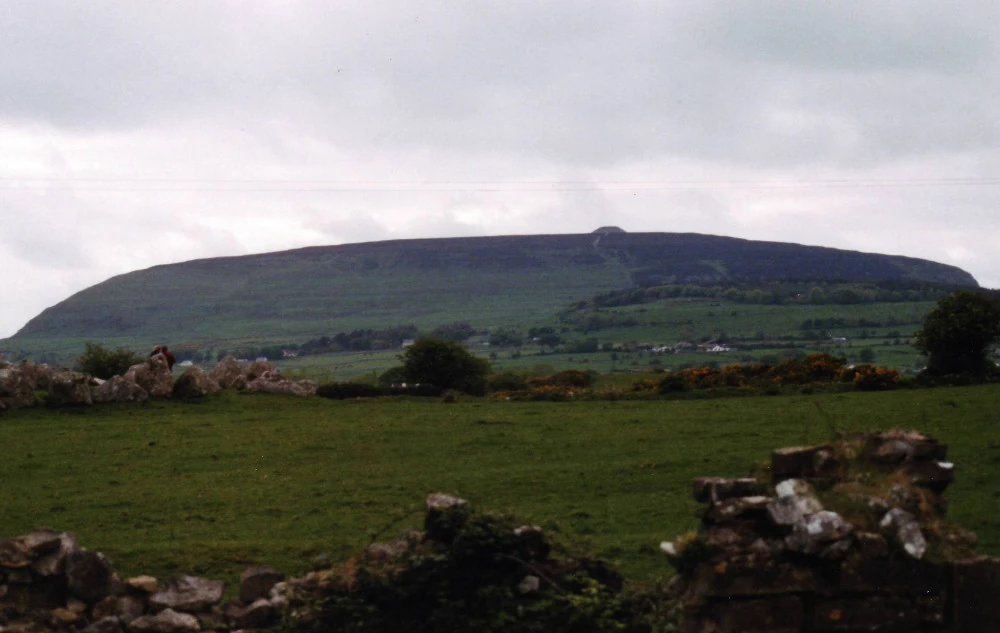
Knocknarea, County Sligo
Psychological colonisation
Colonisation also changes how people see. It can teach the wider population to treat imported systems as natural and older Irish ways as backward. It can teach Irish Travellers to see their own culture through the eyes of institutions that wanted it to disappear.
This helps explain why Ireland can celebrate rebellion, Gaelic culture and freedom while still treating Irish Traveller mobility, horses, clan identity and non-settled ways of living as disorder. The contradiction is not accidental. It is one of the marks left by colonisation.
What decolonisation requires
- Tell the truth about Irish Traveller history and remove the Famine drop-out myth from education and public policy.
- Examine laws and institutions for inherited bias towards fixed, settled and property-based life.
- Treat the 1963 assimilation policy as a living historical issue, not a closed chapter.
- Fund Irish Traveller-led research, education and culture directly, rather than requiring another organisation to control the work.
- Protect Irish Traveller language, family life, animal culture, oral knowledge and community memory.
- Study colonisation, identity rupture, suicide and health together.
- Allow Irish Traveller people to define the questions and share power over the answers.