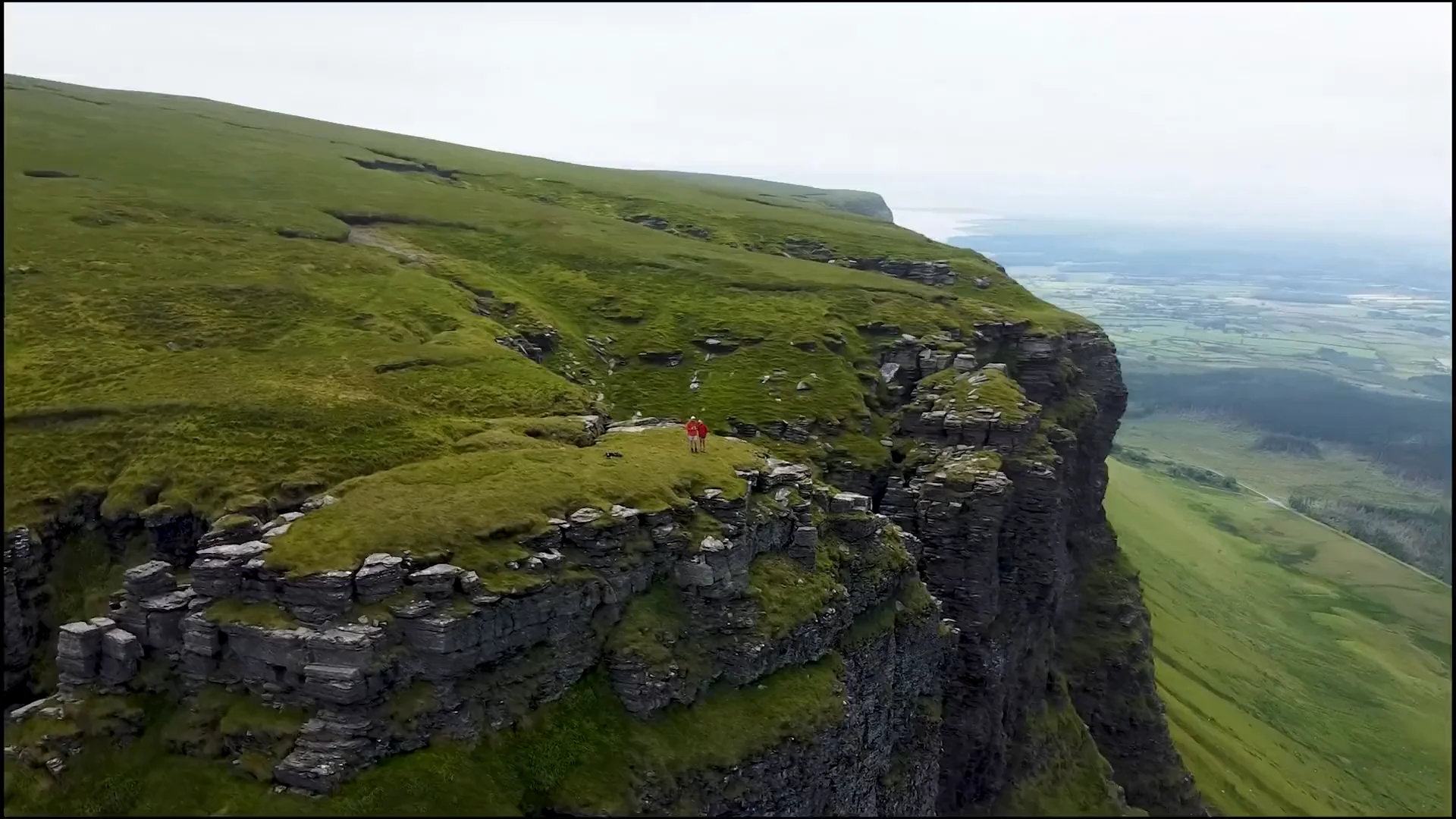
 Photograph unavailable offline
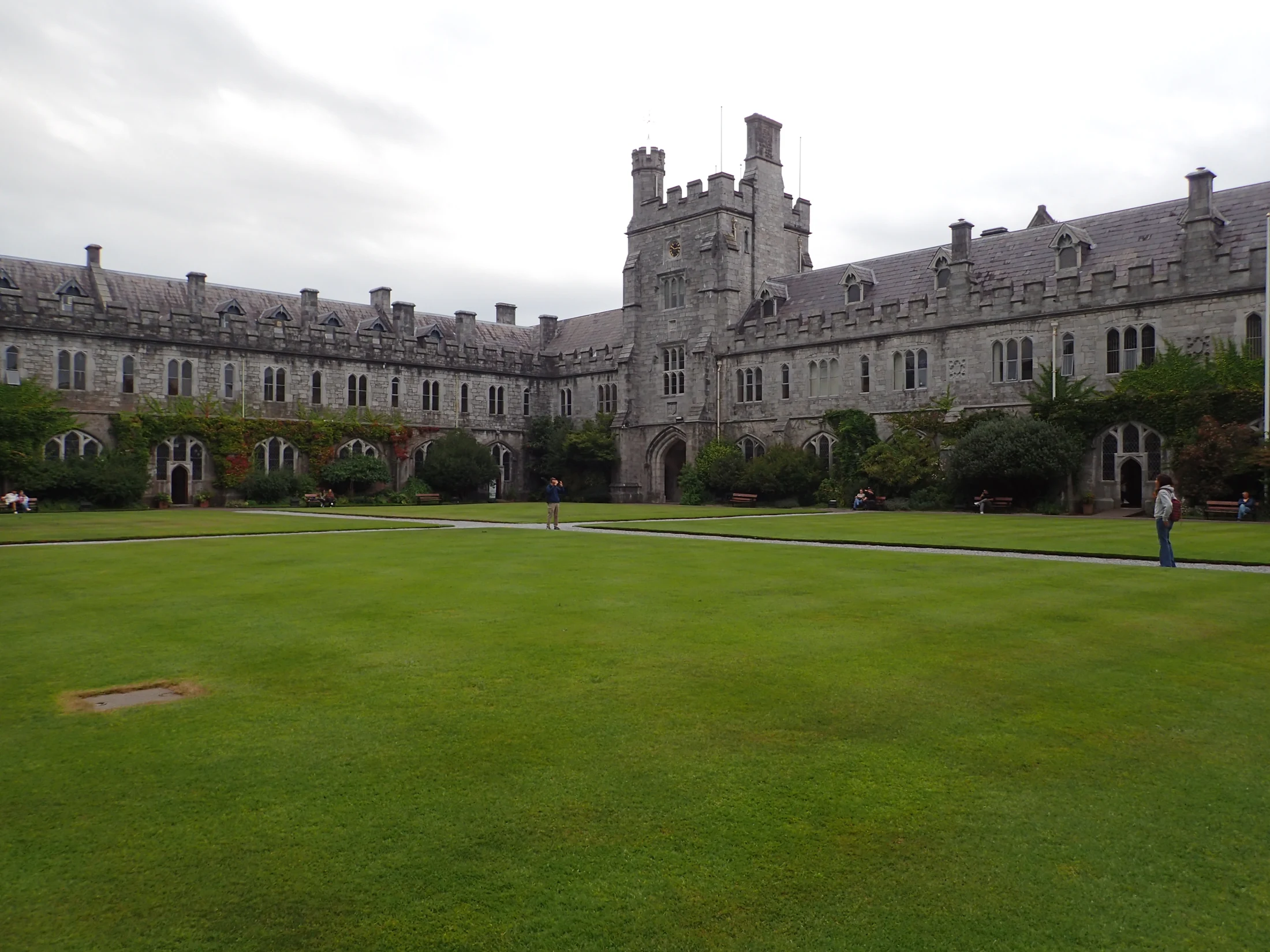
University College Cork quadrangle
Welcome to the TraVision Research Library
This Library brings together the evidence behind the work of the TraVision Foundation.
It exists because we kept finding the same problem: the evidence was there, but the whole story was not being told.
For years, Irish Travellers have experienced severe health and social inequalities. TraVision does not treat those outcomes as matters of individual circumstance alone. We ask what becomes visible when health, history, law, culture, environment, identity and community knowledge are examined together.
Key statistics and evidence
The figures below help explain why TraVision believes a wider research frame is necessary. They are population-level findings, not a complete explanation of Irish Traveller life or of any individual death.
| Indicator | Finding | Source and qualification |
|---|---|---|
| Life expectancy | Overall Irish Traveller life expectancy has been reported at about 66 years, with a gap of about 15 years for men and 11 years for women. | All Ireland Traveller Health Study. |
| Mortality | Widely cited summaries report about four times the general-population mortality rate for Irish Traveller men and three times for Irish Traveller women. | All Ireland Traveller Health Study. |
| Infant mortality | About 3.5 times the general-population rate, often described as almost four times higher. | All Ireland Traveller Health Study. |
| Deaths due to suicide, 2019–2023 | Nearly 10% of matched deaths among people who self-reported as White Irish Traveller were due to suicide, compared with about 1% for White Irish and 2% for all other ethnic groups. | Central Statistics Office, Additional Insights into Deaths using Administrative Data 2023. The CSO cautions that only about 84% of deaths across the period could be matched to the additional datasets and that external causes are harder to match. |
| Irish Traveller mental-health literature | 5,160 scientific references were screened; 19 papers made reference to Irish Traveller mental health. | McKey et al., A rapid review of Irish Traveller mental health and suicide. |
| Suicide-specific literature | Five papers made specific data-based reference to suicide in Irish Travellers. | McKey et al. rapid review. |
The purpose of showing these figures is not to reduce Irish Traveller lives to statistics. It is to make the scale of the problem difficult to overlook and to ask a further question: what may be missing from the explanation?
 Photograph unavailable offline
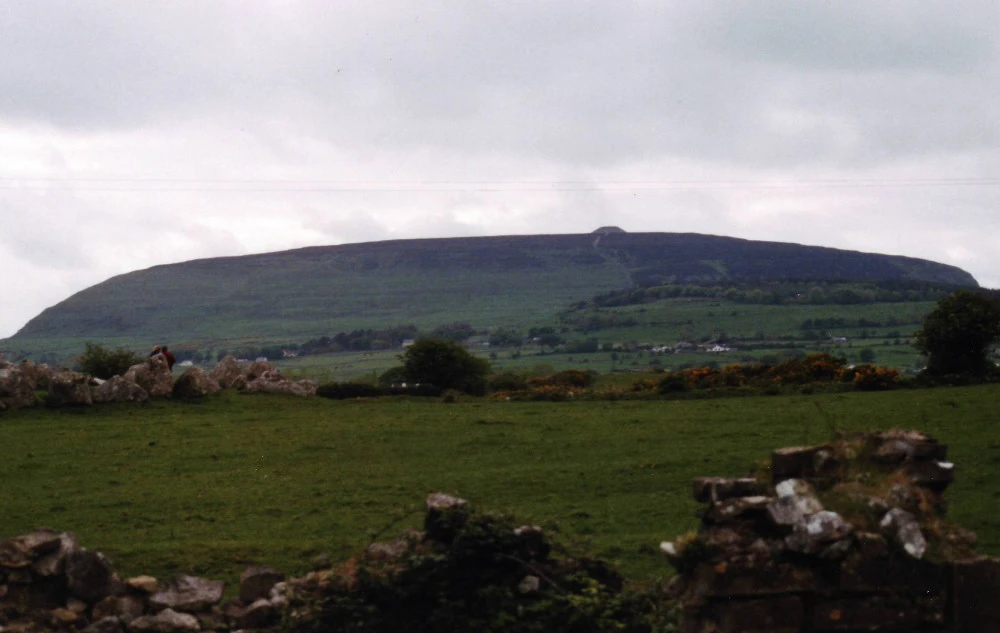
Knocknarea, County Sligo
The problem was not a lack of information
A great deal of research about Irish Travellers already existed. Historians examined Ireland's colonial history, land, settlement and social change. Legal researchers examined movement, vagrancy, trespass, public order and accommodation law. Government reports documented policies directed towards settlement and assimilation.
Health researchers documented mortality, mental health, suicide, injury and access to services. Scientists examined genetics and the human microbiome. Anthropologists, writers and Irish Travellers themselves recorded language, family life, traditions, work, movement and cultural knowledge.
The problem, in TraVision's view, was that these areas were usually kept apart.
- Health was treated as health.
- Housing was treated as housing.
- History was treated as history.
- Law was treated as law.
- Culture was treated as culture.
- Biology was treated as biology.
Irish Traveller life does not happen in separate academic departments. A person does not experience housing separately from family, history, identity, institutional relationships, environment or culture.
That is the gap TraVision set out to examine: what becomes visible when different forms of evidence are brought together and read as parts of the same history.
We began with Irish Traveller knowledge
TraVision is Irish Traveller-led. That distinction matters to how we frame research.
We did not begin by waiting for an outside institution to decide which questions were worth asking. We began with what Irish Traveller families already knew about their own lives, histories, relationships, movement, work, animals, land, language, culture and community. Then we went looking for the evidence.
Irish Traveller knowledge is not placed beneath academic research in this approach. Oral history, family memory, lived experience and community knowledge can reveal things that government records cannot. Government records can reveal things that oral history cannot.
Archaeology can reveal another part of the story. Genetics can answer some questions about ancestry and population history. Law can show how governments and institutions attempted to control movement, land and ways of living. Psychology and public health can examine the effects of social conditions on people and communities. Microbiome science offers another way of studying the relationship between the human body and environment.
None of these sources tells the entire story on its own. The objective is to put the pieces together without pretending that different kinds of evidence are interchangeable.
Two sources of knowledge, one evidence base
Irish Traveller knowledge
- Lived experience
- Family memory
- Oral history
- Cultural traditions
- Community knowledge
- Language
- Intergenerational knowledge
Documentary, academic and scientific evidence
- Historical records
- Legislation and State papers
- Archaeology
- Academic books and research
- Genetics
- Microbiome science
- Public-health data
- Psychology and sociology
- Indigenous and decolonisation research
These are not competing worlds. They can test, challenge, support and add to one another.
Where institutions recorded Irish Travellers from the outside, Irish Traveller families also carried knowledge from within. The purpose of this Library is to bring those sources into the same conversation while keeping clear which claims come from published evidence, which are historical interpretation and which are TraVision's own research or advocacy position.

What the Library is designed to cover
The wider evidence base TraVision is building draws from many areas of knowledge. Not every book, writer or document named in TraVision's working research notes is currently catalogued on this website, so this page does not present intended holdings as material already available.
As the Library grows, TraVision intends it to make the following source areas easier to find and compare:
- Irish Traveller voices and community knowledge: Irish Traveller-authored accounts, oral history, family memory, language and community knowledge.
- Historical books and research: work on Ireland's political, social and colonial history, land, settlement, mobility and continuity.
- Laws and official records: legislation, commissions, State papers, accommodation policy, public-order law and records relating to movement and settlement.
- Health and suicide research: population-health studies, Central Statistics Office data, mental-health research, epidemiology, injury research and suicide-related evidence.
- Scientific research: peer-reviewed work on genetics, Irish Traveller population history, microbiome science and relationships between biology and environment.
- Indigenous and decolonisation research: scholarship on colonisation, cultural continuity, self-determination, identity, minority stress and public health.
- TraVision's own work: Foundation research, evidence reports, submissions, parliamentary material, presentations, documentary work, podcast material and developing Irish Traveller-led research as those items are actually published or made available.
Books, documents and downloads
TraVision intends this to be a working Library, not simply a bibliography. Where a document can lawfully and reliably be shared, the aim is to point readers to the original source or an appropriate download. Where a source is not yet available through this site, it should not be described as though it is already on the shelf.
The Library will continue to grow as material is verified, researched and added.
Looking beyond the statistics
Statistics can show us that Irish Traveller lives are shorter. They can show the scale of suicide, mortality, injury and health inequality. But statistics cannot, by themselves, explain why those patterns exist.
They cannot by themselves explain what happens when a community's relationship with land, movement, family life, work, animals, culture and institutions changes across generations. They also cannot tell us whether a change in physical circumstances has restored trust, belonging, identity or control over one's own life.
Improving accommodation is important. Improving healthcare is important. Improving education is important. TraVision's argument is that these gains do not automatically repair historical mistrust or cultural loss.
Environment, microbiome and change
Environment is about more than the walls of a house. It can include food, family networks, social connection, movement, contact with animals and soil, work, stress, culture, medication, sanitation and the ability to maintain important ways of life.
This is one reason microbiome research became relevant to TraVision's work. Published research involving Irish Travellers has identified microbiome characteristics associated with less-industrialised ways of living and has examined major lifestyle change.
TraVision reads that scientific evidence alongside historical and social changes affecting Irish Traveller life. It does not use microbiome science to claim that one biological factor explains suicide, mental illness or distress. The microbiome is one part of a much larger environmental, social and historical picture.
History is not separate from health
One of the central themes of this Library is that historical change can continue to shape community life after a particular law or policy has ended. TraVision therefore examines history and health in the same research frame rather than assuming they belong in separate boxes.
Areas we examine include:
- The history of land, movement and changing systems of government in Ireland.
- Historical statutes directed at mobility and vagrancy.
- The changing legal treatment of people who did not live according to settled norms.
- Restrictions placed on traditional economic and cultural practices.
- The 1963 Commission on Itinerancy and its stated objective of absorption into the general community.
- Education policies and language used to describe Irish Traveller children and culture.
- Accommodation, public-order and planning systems.
- The relationship between institutional treatment, identity, trust and wellbeing.
TraVision uses the language of colonisation as an interpretive framework for examining how laws, administrative systems, institutional structures and cultural assumptions can connect past governance with present conditions. That framing should be read as TraVision's researched interpretation, not as proof that one historical process explains everything that happens today.
Our Indigenous framework
TraVision's research starts from the position that Irish Travellers are an Indigenous people of Ireland. On this site, that statement is presented explicitly as TraVision Foundation's researched and human-rights position. It is not presented as Indigenous recognition already granted by the Irish State or by the United Nations.
The purpose of that framework is not to construct a story of racial purity or total separation from the broader Irish population. TraVision uses it to ask whether Irish Traveller history, culture and continuity have been interpreted too narrowly when the starting question is only when Irish Travellers genetically diverged from the settled population.
Population genetics can contribute evidence about ancestry, population history and gene flow. It cannot, by itself, tell us the origin of a culture, explain the meaning of identity or replace oral history, archaeology, language, historical records and community knowledge.
The deeper questions are therefore about people as well as populations: what knowledge and traditions were carried, how communities adapted to changing conditions in Ireland, and what happened when ways of life came under pressure from changes in land, law, administration and State policy.
Why TraVision put this Library together
We built this Library because we believe people should be able to see the evidence for themselves.
We are not asking readers to accept TraVision's conclusions simply because this is Irish Traveller-led work. We are putting the sources on the table and asking people to read across them.
- Read the government reports and legislation.
- Read the historians and the scientific research.
- Listen to Irish Traveller voices and community knowledge.
- Examine the health statistics and their limitations.
- Look at the archaeology, genetics and microbiome evidence.
- Explore Indigenous and decolonisation research while keeping TraVision's advocacy framing explicit.
- Read TraVision's own work as it is published, and question it too.
The work began through Irish Traveller knowledge, community conversations, books, archives, legislation, academic research, scientific studies, public records and years of independent investigation. The aim is to bring that material together so it can be found, read, discussed and tested against other evidence.
This is our evidence base. It is also an invitation: come in, look around, read the sources, question them, follow the evidence and make up your own mind about what the whole picture tells us about Irish Travellers, Ireland's history and the conditions that continue to shape Irish Traveller life today.

Two published science sources already linked by TraVision
These two studies are already referenced elsewhere on the site. They are useful examples of why one discipline cannot answer every question.
Gilbert et al. · Scientific Reports · 2017